
Personal Injury
Intersection Accident Lawyer in Palmdale
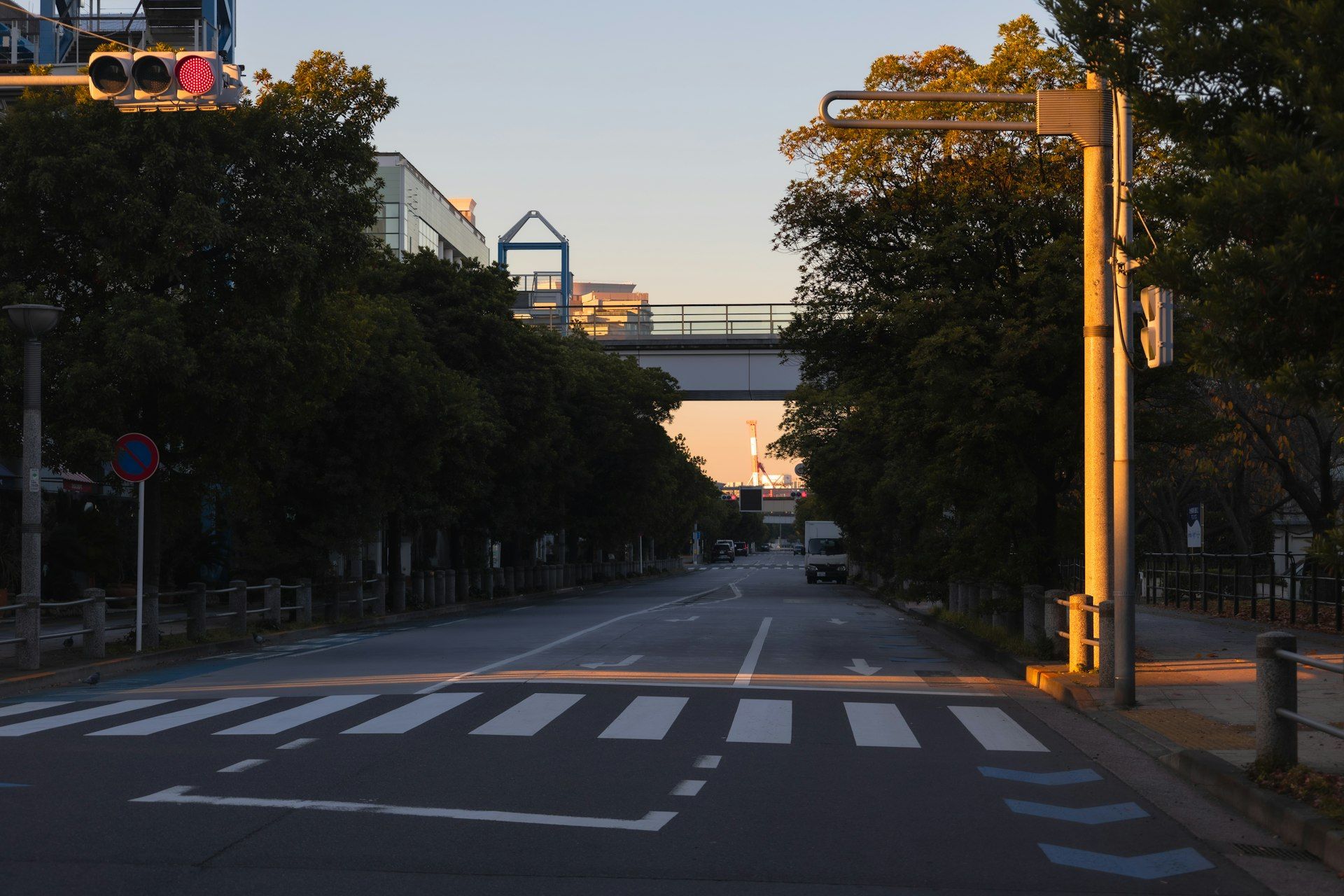
Most intersection crashes come down to one question: who had the right of way? In California, a driver turning left must yield to oncoming traffic, and drivers at a four-way stop must yield to the car that arrived first. If you were hurt at an intersection in Palmdale or Lancaster, get the police report, photos of the signals and signs, and witness names. Do not guess about fault when you talk to an insurance company.
Free case review. Tell us what happened, and Attorney Angelo F. Campano will personally review your message.
Thank you. Attorney Campano will personally review your message, and our office will call you shortly.
(661) 945-5300Why intersection crashes cause serious injuries
At an intersection, cars often hit each other from the side. Side impacts, called T-bone or broadside crashes, can cause head injuries, broken ribs, pelvic fractures, and neck injuries. They are also a leading cause of crashes involving pedestrians and cyclists.
Intersections in the Antelope Valley
The Antelope Valley is laid out on a grid. Long, straight avenues cross long, straight streets, and drivers go fast. Many rural intersections east and west of Palmdale and Lancaster have only stop signs, and some have no signs at all. Cross traffic may be moving at 55 miles per hour.
In town, busy crossings along Palmdale Boulevard, Rancho Vista Boulevard, 10th Street West, Avenue K, and Avenue J see heavy traffic at rush hour. Near the Antelope Valley Mall and other shopping centers, drivers are often looking for parking or turning across traffic.
California right-of-way rules in plain English
- Left turns: A driver turning left must yield to oncoming traffic that is close enough to be a hazard (Vehicle Code 21801).
- Four-way stops: The first car to stop goes first. If two cars arrive together, the car on the left yields to the car on the right (Vehicle Code 21800).
- Uncontrolled intersections: With no signs or signals, the same rule applies. Yield to the car that got there first, or to the car on your right.
- Pedestrians: Drivers must yield to people in a crosswalk, marked or unmarked (Vehicle Code 21950).
How we prove what happened
We collect the police report, photos, and witness statements. We look for traffic camera or business video and check vehicle data when it is available. Sometimes the damage to the cars shows the angle and speed of impact. Angelo Campano handles this work himself and explains each step to you.
The consultation is free, and you pay no fee unless we win.
How it works
Three steps. Your only job is step one.
Tell us what happened
Call, text, or use the short form. It takes a few minutes, and it is free.
We take it from there
We gather the evidence, deal with the insurers, and help you get medical care while you recover.
We work to resolve your case
Most cases settle. If the insurance company will not be fair, Angelo is ready to take your case to court.
Your only job is step one.
Client reviews
What clients say
4.9 on Google, 200+ reviews Read them on Google → All client reviews →
Testimonials are from past clients. They are not a guarantee, warranty, or prediction of the outcome of your case.
FAQ
Frequently asked questions
The other driver says the light was yellow. What now?
This is common. We look for independent proof, such as witnesses, traffic and business cameras, vehicle data, and the damage pattern on the cars. Evidence like video can be erased within days, so call early.
I was turning left and got hit. Is it my fault?
Not always. Left-turning drivers must yield, but the other driver may have been speeding, running a red light, or driving without headlights. Fault can be shared, and under California law you can still recover your share.
What is a T-bone crash?
A crash where the front of one car hits the side of another, forming a "T." Side impacts are dangerous because there is little metal between the driver and the other car.
Related cases we handle
Related cases we handle
-
Car Accidents
Rear-end, T-bone, freeway, and intersection crashes. We deal with the insurance company for you.
Learn more → -
Freeway Accidents
High-speed crashes on SR-14, SR-138, and I-5.
Learn more → -
Pedestrian Accidents
Hit by a car while walking? Drivers must yield to people in crosswalks.
Learn more → -
Bicycle Accidents
Cyclists have the same rights on the road as drivers.
Learn more →
Talk to Angelo’s office today
Free consultation. No fee unless we win. Hablamos español.